Eli M. Davis · Ph.D. Candidate (ABD), University of South Carolina · Birmingham, Alabama
What's the story?
Everything I do asks that question.
I'm Eli M. Davis — a special-education teacher, a Ph.D. candidate (ABD) at the University of South Carolina, and the founder of 4 Black Centuries LLC. I study how environments write themselves into people, and I build the methods and tools that help education write restoration instead. And I train educators, leaders, and organizations to use artificial intelligence with authority.
Milwaukee, 2014 — a summer unit I built for neurodivergent learners: a tent, a campfire, and a river of student artwork running through the classroom.
The unit, lived in — drums around the campfire.
The Educator
The classroom is my first laboratory
I have taught special education since 2008 — Wisconsin, North Carolina, South Carolina, and now Birmingham, Alabama — students the system was not designed to see, in buildings I have loved. Everything else on this page grew from that ground. The research questions came from my students before they came from the literature. The software I build exists because I watched good frameworks drown in paperwork while children waited. The classroom named me before the academy did: Teacher of the Year, Outstanding Teacher, a Harvard Race, Equity, and Leadership fellowship — each one earned at the front of a room.
In 2014, for a summer unit in Milwaukee, I turned a classroom into a campsite for neurodivergent learners — a real tent, a campfire, a painted river banked with their own artwork. A decade before I built software for families raising neurodivergent children, I built them a world. The instinct hasn't changed; only the materials have.
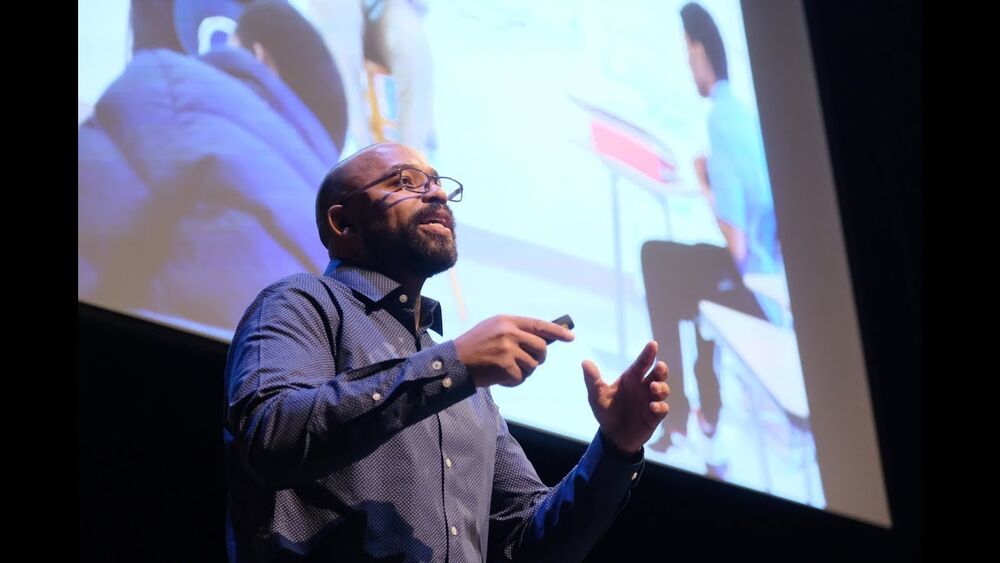
I've carried this work beyond my own classroom: piloting AI-supported modules with preservice teachers at Miles College, and speaking to educators about what epigenetics — understood conceptually, as the study of how experience and environment shape what gets expressed in a life — asks of the people who teach children carrying history in their bodies.
Excellence is the standard. Dignity is the floor.
The Scholar
Epigenetic Consciousness: how environments write people, and how education writes back
I am a Ph.D. candidate in Teaching and Learning, with a cognate in educational psychology, at the University of South Carolina (comprehensive examinations passed with honors), advised by Dr. Gloria Boutté. My dissertation develops Epigenetic Consciousness (EC) — a framework introduced in a peer-reviewed article (Davis, 2025, Simon Fraser University Educational Review) arguing that environments — material, structural, relational, informational — write themselves into bodies and minds across generations, and that education can run that writing in both directions: it can harm, and it can restore. The framework stands on five literatures: sociogenesis, behavioral epigenetics, critical pedagogy, endarkened feminist epistemology, and African epistemology.
Epigenetic Consciousness
An awareness that the story written into a person is not fixed — and that classrooms, curricula, and relationships are among the writers. EC names both directions: the weathering and the restoration. The question it hands every educator is the one that drives all my work: what's the story?
Sociogenic Entropy
The wear that hostile social environments work on a people — understood not as destruction but as reformation. Nothing is lost; it reorganizes. Which means harm and healing are the same process running in opposite directions, and repair means reforming forward, not returning to a baseline that never existed.
Historical Contextuality
The expansion of emotional perception beyond the individual moment into the intergenerational dimension. Emotional intelligence asks, what am I feeling right now, and why? Historical contextuality asks, what am I feeling right now, why — and what history produced the conditions that generated this feeling? It adds the intergenerational body as a site of knowledge, because epigenetics only means anything through history.
Agentic Nkwaethnography
The research method I developed for the dissertation: an AI-mediated autoethnography in which the human narrates and the machine carries. It honors the endarkened feminist tradition it descends from while contributing what my comprehensive exams found missing from the educational literature — a fully developed Black male epistemology.
The Field
The research crosses water
This scholarship is not desk work. It has been carried — twice as a U.S. Department of Education Fulbright-Hays participant, to Nigeria in 2022 and Barbados in 2023; to Ghana, to the wall at Assin Manso; into archives of family and place; through a photographic record that now forms one of my dissertation's three operational layers. The framework was validated the way the tradition demands: in community, across continents, by elders and educators who recognized the story before I had the vocabulary for it.
That is what makes the work durable. The theory holds in a Birmingham hallway and in a classroom an ocean away, because it describes something older than either.
Assin Manso, Ghana — April 2022. In my hand, on the wall: "I told you I would take you home."
Nigeria, 2022 — Fulbright-Hays. A classroom an ocean away.
Accra, 2022 — fish-stock pepper soup, eaten by hand, at the W. E. B. Du Bois House. I called it what it was: feeding ancestral DNA.
The Archive
Reading environments
I am a photographer. For years I have photographed the places where learning happens — which, if my research is right, is everywhere: classrooms and hallways, porches and kitchens, riverbanks and dungeon walls. Environments write themselves into people, and the camera catches the writing mid-sentence. Every photograph in this archive comes with a story. This is where I tell them.
No. 000 — the first learning environment.
No. 000 — The porch
I had never seen this photograph until the morning I found it in my own archive — June 11, 2026, sitting at the bottom of the scroll with the rest of my family's prints. A boy in overalls on a porch, a white iron gate, grass beyond it, and somebody who loved him on the other side of the camera.
This is where the dissertation actually starts. Before any classroom had me, this environment did — the porch, the gate, the people just out of frame. My research argues that environments write themselves into a person. I am the evidence. Look at that boy watching the camera: the question was already in him. What's the story?
And know this about him: in a few years, this kid will be tested for special education. He didn't get in. The school never gave him the label — it just gave him the sentence: held back twice, seated in the "slow class." The man he became teaches special education now. Hold that, and then look at No. 002.
No. 002 — The Osun River
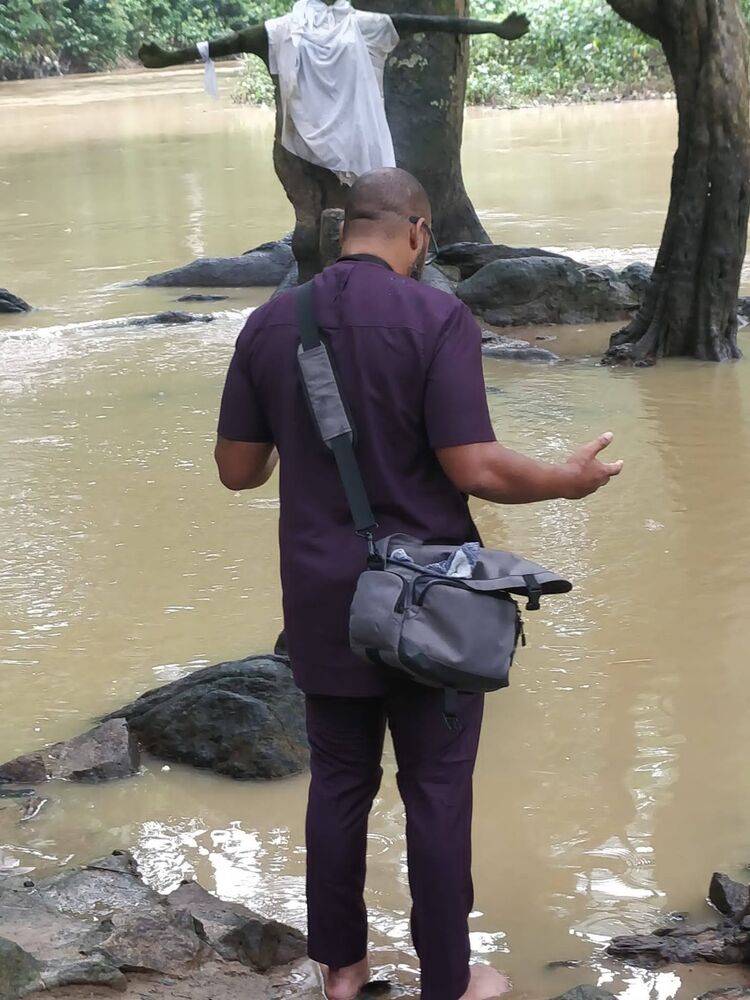
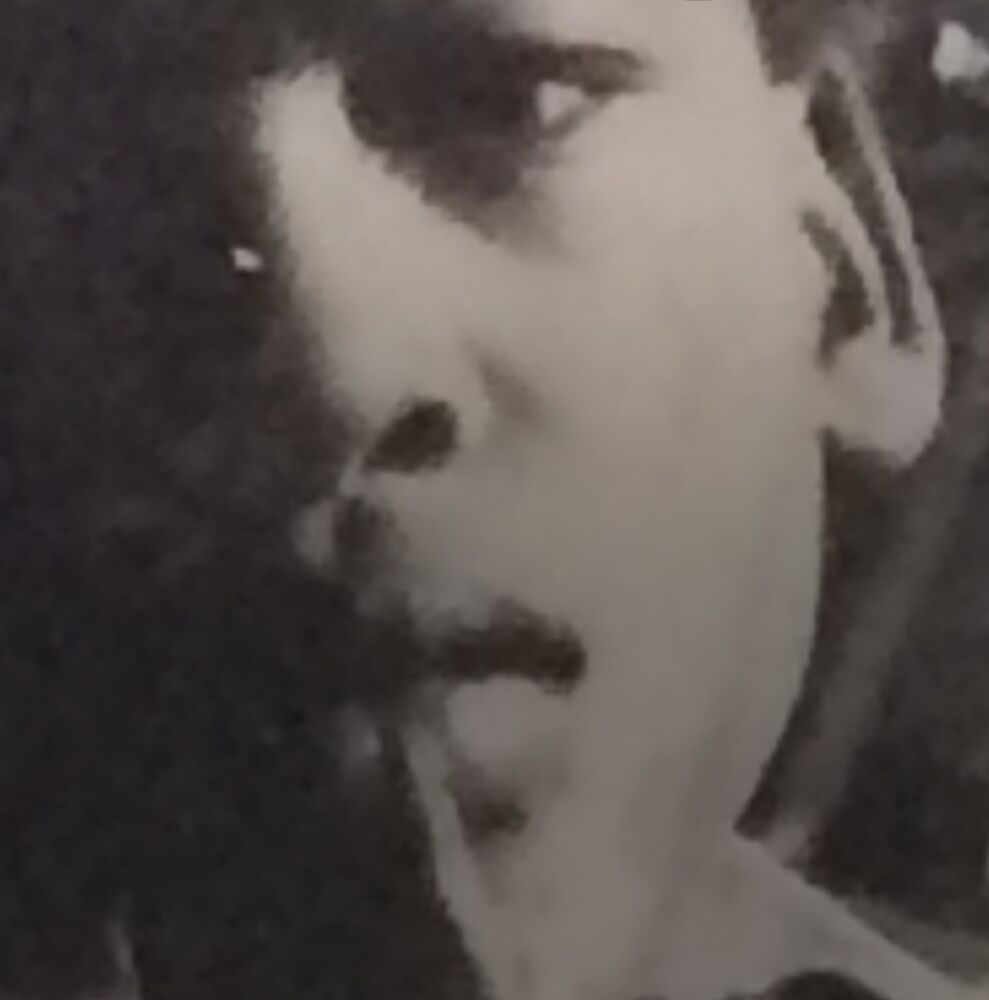
Osogbo, Nigeria — July 2022. Six months before this, somebody took a picture of me in a brown coat and a scarf. It's a dope picture. But when I look at it, I see a sad me. At the Osun River, I prayed on what was making that man sad. I don't know what the prayer did. I do know those waters carry a lot of history — many people have come to that river and prayed, in that section, right there. And I did too.
My Black self. My self who was held back in the third grade and the fourth grade, who had to repeat the fourth grade, who was put in the fifth-grade "slow class." That self stood barefoot in a river that has received prayers for longer than this country has existed — and is finishing a Ph.D. The grown man praying in this photograph is praying for the release of that narrative — the one written on the boy in No. 000. The environment wrote "slow" on a child. The river, the work, and the years are writing something else.
No. 002 — the Osun River, Osogbo. Praying on it.
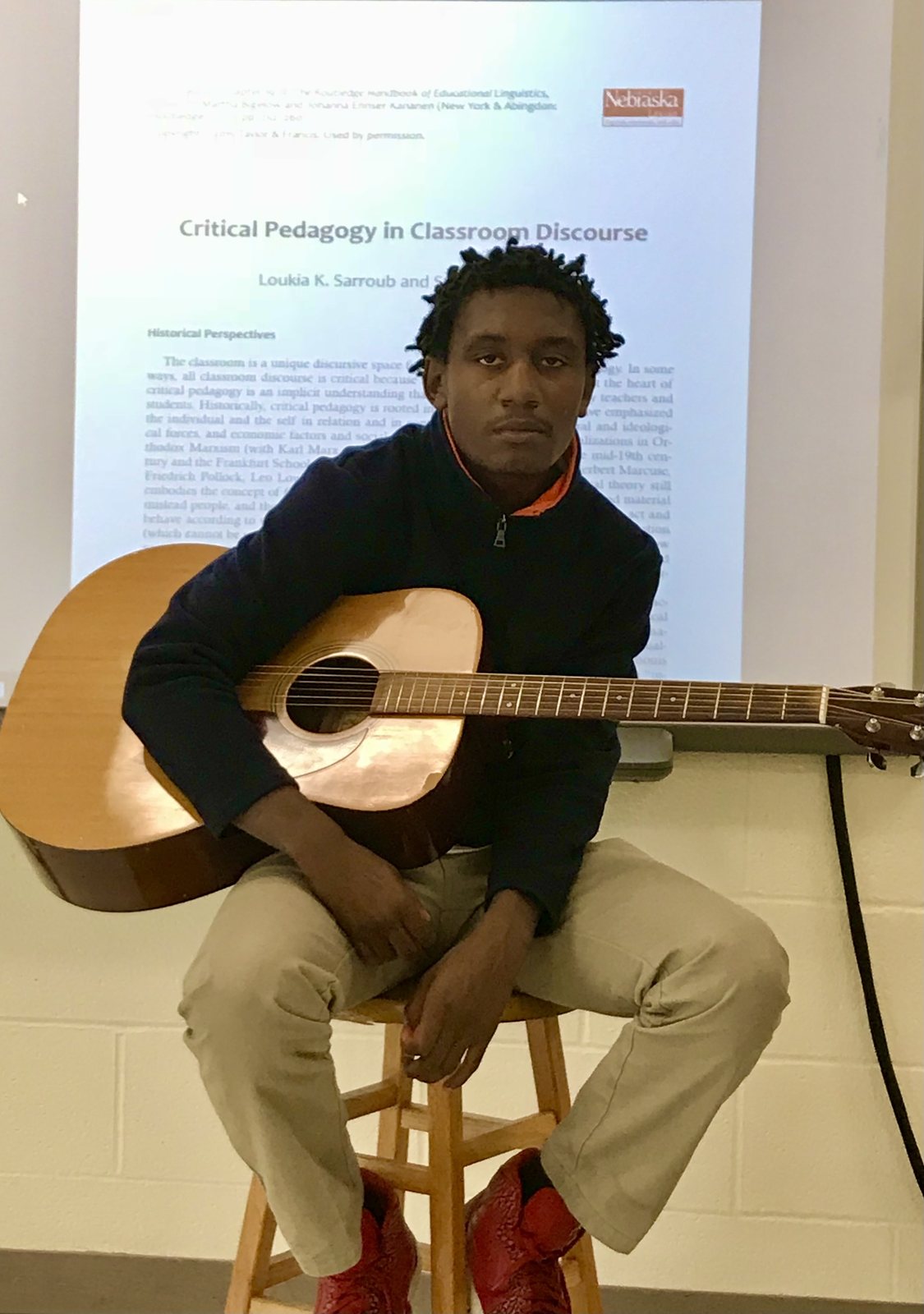
No. 003 — the guitar. Birmingham, 2025.
No. 003 — The guitar
I do this everywhere I teach — I have for years, in multiple places. I bring the guitar and I sing the ABCs, silly songs, whatever the room needs. And then I hand the guitar to the students and let them play. They seem to like that part best. Recognition first, always: the instrument is not a performance, it's an invitation.
The board behind me is blurred on purpose — my students' names live on that screen, and their names are theirs. The faces of children here are softened for the same reason. Dignity is the floor, including in photographs.
The AI Practice
The human narrates. The machine carries.
I don't just use AI — I built a research methodology on it, with sovereignty as the first principle. The intelligence directing the work is human; the machine extends its reach. That stance turns out to be exactly what schools, researchers, and organizations need as they decide what AI will be allowed to do. Read the full position: theory, methodology, practice, training →
Carrier-supervised AI
AI extrapolates; the human supervises with lived knowledge. My workflows catch machine drift with the body's record — and they're designed so anyone can replicate the discipline in their own domain.
One voice at machine scale
I developed a reproducible technique for keeping many parallel AI agents writing in a single human voice — assembled rules, definitions, and standards every agent loads before it works. The method is citable, teachable, and transfers to any organization's writing.
Sovereignty first
No person's private data leaves their hands. No machine interprets a child. The human stays the author of their own story. I help institutions adopt AI with those lines drawn in code, not just in policy.
AI literacy is a literacy
I treat AI fluency the way literacy scholars treat reading and writing — a skill set every educator and student deserves access to. I practice it daily across the full toolchain — Claude, Cursor, Codex, Gemini, ChatGPT, Perplexity, NotebookLM, Antigravity — I built a custom AI module for my preservice teachers, I've taught prompt-engineering workshops for educator networks, and I hosted a 12-episode podcast season on AI in education. I don't just use the tools — I teach people to hold them with authority.
The Builder
I ship what I theorize
The dissertation argues that research can live as working software. So mine does — and the company makes the same argument for schools.
GoodCatch →
A school behavior platform that makes recognition the path of least resistance — three-tap logging, restorative documentation that auto-generates district paperwork, and one-tap AI reports. Built by 4 Black Centuries LLC, piloting in Birmingham for 2026–27. Catch them being good.
ECHO
Evidence, Culture, Healing, Outcomes. An adult-facing tutoring intelligence platform for in-person reading and math tutoring: whole-child intake that listens to the teacher, the family, and the student before prescribing anything; standards-aligned planning; progress monitoring; family communication. The motto is the method — ECHO learns the child before it teaches the child — and the Epigenetic Consciousness framework is its soul. Built with Cursor and agentic AI.
Giovanna
An awareness companion for families raising neurodivergent children — log the hard moments when you think of them, watch the patterns emerge, and share clearer language with schools and therapists. Zero-knowledge encrypted: the family's data is unreadable to everyone but the family, including us. Parenting with confidence, not compliance.
The EC Research Platform
The dissertation's living artifact: an AI-driven research engine, a coded evidence database of 650+ entries, and a photographic archive spanning my teaching and travel across the diaspora. The findings aren't only written about the tool — they operate inside it.
NBPTS Living Evidence Repository
An AI-powered qualitative research dashboard supporting the National Board for Professional Teaching Standards' revision of the Literacy: Reading–Language Arts standards — focus-group transcripts in, coded themes and an auditable evidence trail out. Built with Dr. Teaira C. McMurtry (University of Alabama at Birmingham).
The Record
Selected publications, honors, and what's coming
Publications
Davis, E. (2025). Epigenetic consciousness: Understanding historical trauma, identity
formation, and the path to transformational healing.
Simon
Fraser University Educational Review, 17(1), 23–36.
Downloaded 380+ times in its first ten months, with sustained month-over-month
readership — the audience for this framework arrived before the dissertation
did.
Davis, E. (2024). Harnessing AI for educational frameworks: The
Basquiat Pedagogy Framework.
Equity & Access, American Consortium for Equity in Education.
Davis, E. (forthcoming). (Our)Story: African Diaspora Literacy as a healing and
restorative antidote to anti-Blackness. In J. Lyiscott (Ed.), Beacon Press.
Public scholarship: I practice in public — essays on Black education, AI,
epigenetics, and what schools write into the body, at
elidavis4.substack.com and
medium.com/@ancestors400, and in
Equity & Access and An Injustice!.
Education
Ph.D., Teaching and Learning — cognate in educational psychology, University of South Carolina (ABD; defense expected August 2026) · M.S., Educational Leadership and Director of Curriculum, Cardinal Stritch University (2015) · B.S., Psychology, University of Wisconsin–Milwaukee (2008).
Recognition
Fulbright-Hays Group Projects Abroad, U.S. Department of Education — Nigeria (2022) and Barbados (2023) · Excellence in Equity Award, American Consortium for Equity in Education (2024) · Fellow, Race, Equity, and Leadership in Schools, The Principals' Center, Harvard Graduate School of Education (2019) · Teacher of the Year, Lincoln Heights Academy (2018) · Outstanding Teacher, Hillside High School (2016).
Presentations
American Educational Research Association Annual Meeting — 2024 (Philadelphia) and 2025 (Denver, with Dr. Teaira C. McMurtry) · National Council for Black Studies (2019) · Guest lecture, School of Education, University of California, Riverside (2020) · "Why Are All the Black Men Choosing Not to Teach?", Premier 100 Conference, Columbia, SC (2023) · AI prompt-engineering workshops for educators with CarolinaCAP and the South Carolina Alliance of Black School Educators (2024) · Teacher Talk: The Art and Architecture of Leadership, Teacher Leadership Forum, Charlotte-Mecklenburg Schools (2019).
Podcast
Host, Artificial Intelligence: Real Talk — a 12-episode 2025 hosting run on AI in education: bias and access, equity and inclusion, dyslexia innovation, conversational AI, and AI in everyday life. Guests included Dr. Teaira C. McMurtry, Dr. Marlena Ward Dodds, Delquan Dorsey, and Annette Teasdell. Also on Spotify.
Books
The Carry — the book the dissertation is becoming: the story
of Epigenetic Consciousness written for every reader, not only the academy. The
framework, the archive, and the father-to-son inheritance that started it, carried
onto the page.
Also in preparation: a critical duoethnography on linguistic healing and Black
Language with Dr. Teaira C. McMurtry, and a chapter on Black Language and healing
co-authored with Dr. McMurtry and Dr. Gloria Boutté.
Latest writing
Work With Me
Speaking, professional development, and research consulting
My lead offer is AI training — hands-on, sovereignty-first, taught by someone who builds with these tools every day and studies learning for a living. From a single keynote to a season of professional development to advising a research or product team, the throughline is the same: rigorous scholarship, working tools, and the question that opens people — what's the story?
AI training, sovereignty-first
Hands-on training for educators, leaders, and teams — from first prompt to agentic workflows — using AI at full power without surrendering authorship, privacy, or judgment.
Epigenetics & education
What the science of environment and expression — held conceptually, without overclaiming — asks of schools.
Positive-first behavior systems
Recognition-led, restorative, dignity-by-design alternatives to surveillance discipline — and the data to defend them.
Endarkened & Black male epistemologies
Research methods that honor where knowing comes from — for doctoral programs and methodologists.
Available for keynotes, PD, and advisory work.
Get in touch
Bring the question to your people
If your school, university, or organization is working out what AI, behavior, or healing should look like in practice, I'd love to talk.
eli@4blackcenturies.com